From Needle and Thread to AI Digital Knitting Weaving the Future of Fashion with Data
While many still view the garment industry as a traditional sector, AI, data and sustainability are already redefining the fashion supply chain. For Cobalt Fashion, part of the Fung Group, every knitted garment is more than yarn and craftsmanship - it is underpinned by millions of production data points.
As a partner to global retailers and brands worldwide, Cobalt Fashion embarked on its digital transformation journey long before today’s AI boom. It gradually converted traditional, experience-led craftsmanship into structured digital process, building a vast repository of material and production data. By harnessing algorithmic systems and 3D digital design, the company significantly improved supply chain agility and shortened development cycles, laying a robust digital foundation to respond to rapidly changing market demand.
Reflecting on the company’s journey towards ‘digital knitting’, Mr Roger Chan, Chief Operating Officer and Chief Technology Officer of Cobalt Fashion (Hong Kong) Limited, notes, “AI is not the starting point - data is. Without reliable data and standardised processes, even the most advanced AI technology cannot create genuine commercial value.”
A Three-Step Journey to AI Transformation
As an AI pioneer, Roger outlines Cobalt Fashion’s AI journey in three steps: building a robust data foundation, cultivating AI talent, and creating measurable commercial value.
Cobalt Fashion began its digital transformation seven years ago by digitising data on raw materials, design and production. Over time, decades of manufacturing expertise were transformed into the world’s largest knitwear production database, positioning the company to master global supply chain shifts and capitalise on emerging Consumer-to-Manufacturer (C2M) trends.
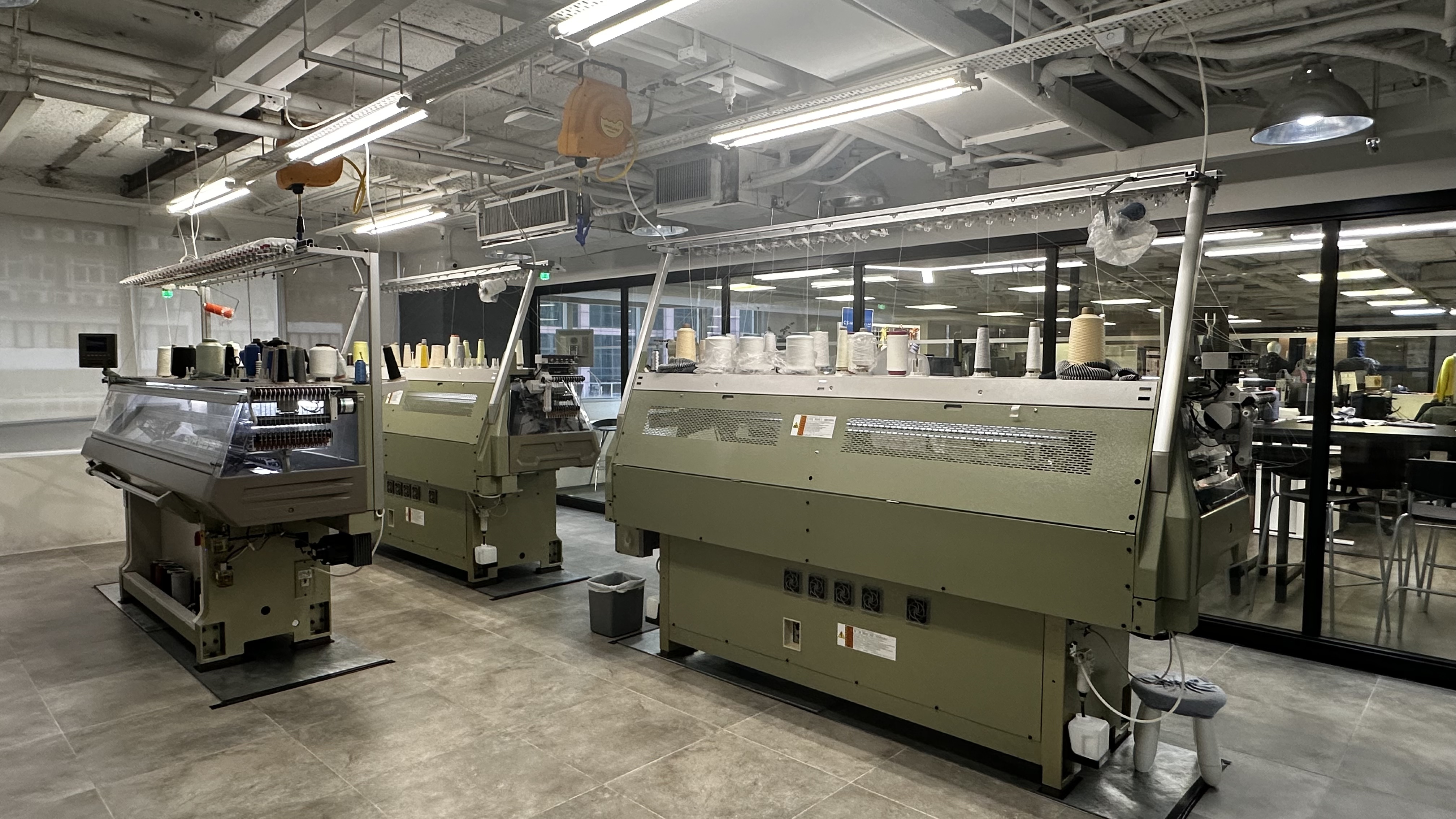
As AI gained momentum, the company enrolled its management team in AI courses at the Fung Academy to deepen their understanding of AI, automation and the technology’s future potential. Cobalt Fashion then established a dedicated AI team, bringing in data scientists and AI engineers to drive applications across product development and supply chain management.
Roger explained, “Many companies are now using AI tools, but very few can quantify their economic value. While leaders focus on cost and ROI, we begin with product development to solve industry pain points—creating new value and reshaping the commercial model.”
Fashion’s New Battleground: Speed to Market
Fashion has traditionally relied on demand forecasting, so brands need to make major decisions more than six months before a selling season begins. Consequently, 30%-40% of inventory remains unsold each season, eroding profits while generating immense waste.
Roger believes that speed has become the decisive advantage. The conventional journey from concept to retail shelf takes approximately 30 to 35 weeks, with production and delivery alone account for around 8 weeks. With limited room for compression, Cobalt Fashion therefore focused on shortening the product development stage. By establishing digital connections across production lines, the company has real-time visibility of the colours and materials available at each factory. Partners also follow standard operating procedures (SOPs), allowing them to begin producing samples upon receiving digital files.

“The comprehensive data gives our supply chain the flexibility to meet the market’s growing demand for small batch, and faster responses closer to market. Wherever production takes place, we can guarantee consistent quality. Over the past five to six years, AI and digitisation have helped us achieved double-digit growth.”
Regulations are Coming — Data is Competitiveness
The European Union’s Ecodesign for Sustainable Products Regulation (ESPR) is expected to introduce Digital Product Passports progressively from 2027, with textiles and apparel among the priority sectors. Companies will be required to provide product’s lifecycle data through data carriers such as QR codes, covering product details, origin, material composition, recyclability, circularity and more.
Addressing industry readiness for Digital Product Passports (DPP), Roger points out that while companies frequently talk about the framework, many remain unaware of their existing data gaps. They leveraged GS1 HK’s Digital Product Passport platform as a starting point.

“The platform helps businesses organise the required product and supply chain data, and explore which data can be connected directly to the platform and displayed to consumers digitally through standardised QR codes, enabling us to plan our data management far more systematically.”
In addition, Cobalt Fashion began managing Scope 3 carbon emissions two years ago. Roger reveals that the company is participating in a pilot initiative led by the Hong Kong Woollen & Synthetic Knitting Manufacturers' Association, with implementation and development by the Hong Kong Productivity Council (HKPC), to test a carbon emissions assessment tool. Looking ahead, the company hopes to integrate AI capabilities into the tool, enabling SMEs to generate ESG reports and compliance documents automatically simply by inputting product and supply chain data, which can then be uploaded to the Digital Product Passport (DPP) platform.
As a member of GS1 Global Public Policy Group, Roger represents the apparel sector by voicing its needs to GS1 headquarters and regional chapters. He also advocates greater cross-border governmental collaboration and data sharing. He believes Digital Product Passports should be implemented gradually, giving SMEs sufficient time to establish their data foundations and strengthen supply chain collaboration.
In Hong Kong, Roger leads GS1 HK’s Digital Passport Workgroup, actively promoting enhancements of the platform to support SME implementation in a cost-effective & digital manner, while advocating for government policy backing.

Hong Kong as the “Supply Chain Brain”
Despite growing supply chain complexities, Roger emphasises Hong Kong’s inherent advantages in apparel supply chains, noting its evolution into an international supply chain management and innovation centre. He points out that while production spans Chinese Mainland, Vietnam, Cambodia, and Bangladesh, core product research and development, design, and supply chain management stay centered in Hong Kong.
He says: “Hong Kong is backed by the country’s strong and advanced manufacturing and material R&D capabilities, while also possessing an international outlook and talents — serving as the natural bridge. As raw materials, production locations and markets become more dispersed, companies need real-time access to supply chain data from different regions to make accurate decisions. Hong Kong has the network, talent and data management capabilities to act as the supply chain’s brain.”
Cobalt Fashion continues to knit innovation into every fibre. Alongside the recent launch of “AlgaFila”, an aerogel fibre derived from farmed seaweed, they developed an antibacterial fibre technology during the pandemic. By embedding antibacterial functionality directly into the fibre structure instead of relying on surface coatings, efficacy remains intact after multiple washings while also reducing odour. Roger highlights that they are expanding its use in apparel, supporting the vision of “wash less, wear longer, stay greener”, which also reduces water and energy consumption.
Another innovation focuses on sportswear. The team has developed a BPA-free stretch material that maintains elasticity while reducing oxidation. Its compatibility with thermal-melt recycling makes circular garment production more feasible.

Looking ahead, Roger believes that the industry’s approach to sustainability should go beyond compliance and information disclosure to become a catalyst for supply chain evolution. Manufacturers in many production markets are already collecting carbon-emissions and ESG data, but without financing to upgrade equipment and optimise manufacturing processes, such data remains difficult to convert into actual carbon reduction results. He points out that Hong Kong, as Asia’s leading green and sustainable finance centre, can play a pivotal role—enabling companies to use credible and transparent transaction data that financial institutions can assess when evaluating business conditions, which ultimately facilitates green financing.