

Tam Jai International Quantifies the Carbon Benefits of “Eat Green” Choices with GS1 HK’s ESG Supply Chain Community Solution
Background
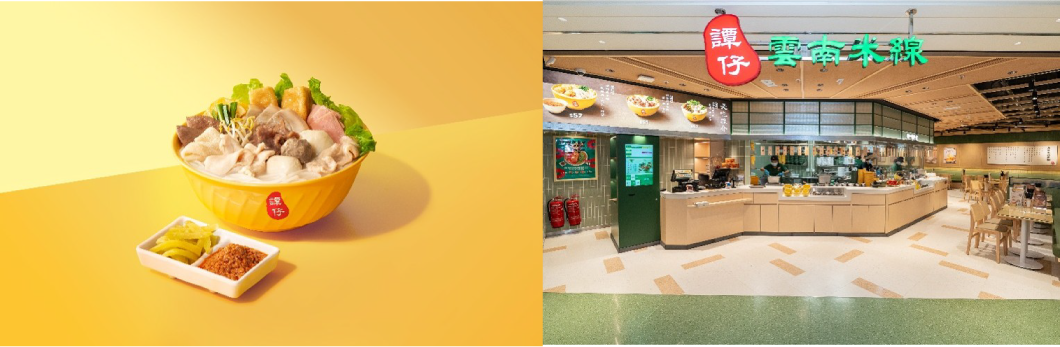
In recent years, consumers are increasingly embracing “eat green” lifestyles— opting more plant-based meals that benefit both personal health and environmental sustainability. In Hong Kong and across the region, growing awareness of climate change, together with demand for nutritious, lower-carbon dining options, is driving a shift toward menus that feature more vegetables and less meat, accompanied by clear, credible information that helps diners make informed choices.
As a leading restaurant group, Tam Jai International has long promoted the “Green Dining” concept. While this commitment was reflected across its menu and brand positioning, Tam Jai needed credible, product-level carbon data to quantify the environmental benefits of its offerings and communicate them transparently to customers.
They also required a data-driven baseline to identify carbon hotspots and explore lower-carbon alternatives, which in turn validates their “Green Dining” approach.
Solution
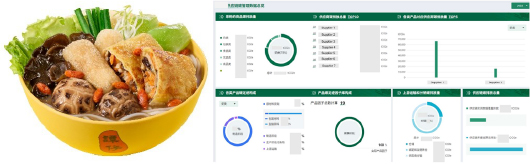
Tam Jai International applied GS1 Hong Kong’s ESG Supply Chain Community Solution to assess the carbon footprint of its signature Veggie Cross-bridge Mixian.
With GS1 HK’s support, Tam Jai established a structured, standardized baseline for carbon monitoring for a conventional bowl of mixian and mapped the emissions generated across its product life cycle.
Measuring the Carbon Impact of “Eat Green” Choices
Conducted in accordance with ISO 14067, the end-to-end assessment covered the sourcing of ingredients, transportation, preparation at the restaurant and waste treatment, providing Tam Jai with a comprehensive view of emissions across the product lifecycle.
Several key carbon hotspots were identified, including animal proteins, dairy products and air-freighted ingredients. As ingredients accounted for more than 85% of the total carbon footprint of a bowl of mixian, Tam Jai’s Supply Chain Department obtained a robust, data-driven foundation for exploring lower-carbon alternatives and validating the environmental impact of its “Green Dining” approach.
Turning Data into Consumer Value
The assessment enabled Tam Jai to translate its sustainability initiatives into clear and verifiable information for consumers. Results showed that the Veggie Cross-bridge Mixian has a carbon footprint nearly three times lower than that of the classic Cross-bridge Mixian. When served with konjac noodles, the carbon footprint of the vegetarian option can be reduced to as low as 1.15 kg CO2e per bowl.
These measurable results allow Tam Jai to communicate the environmental benefits of its plant-based menu options with greater confidence and transparency. More importantly, the information offers diners a greener and healthier choice.
Benefits
- Enabled transparent and standardised communication of the vegetarian mixian’s carbon footprint, building customer trust and awareness.
- Delivered data-driven insights into carbon hotspots and potential emission reduction opportunities across the product lifecycle.
- Strengthened Tam Jai’s positioning as a sustainability-focused F&B brand, supporting its broader ESG strategy and commitments.

“Customers increasingly want to understand the environmental impact of the food they enjoy. Through GS1 Hong Kong’s ESG Supply Chain Community Solution, we were able to assess the carbon footprint of our vegetarian mixian with greater structure and clarity. The findings help us communicate relevant sustainability information more transparently, while identifying opportunities to reduce emissions across the product lifecycle. This initiative represents a meaningful step in strengthening customer awareness and advancing Tam Jai International’s broader ESG commitments.”
Ms. Charine Lau, ESG Committee Chair
Tam Jai International
About the Company
As one of the leading restaurant groups in Hong Kong, TJI has rapidly expanded its network to over 260 stores across various markets, including Mainland China, Singapore, Japan, Australia, Malaysia and the Philippines. Apart from self-operating restaurants, the Group also adopts alternative models such as joint venture, franchise or strategic partnership for overseas markets. The Group’s portfolio of distinguished brands includes TamJai Yunnan Mixian (譚仔雲南米線), TamJai SamGor Mixian (譚仔三哥米線), and international brand TamJai Mixian, as well as Japanese dining brands, Marugame Seimen and Yakiniku Yamagyu, through franchise and licensing in Hong Kong.